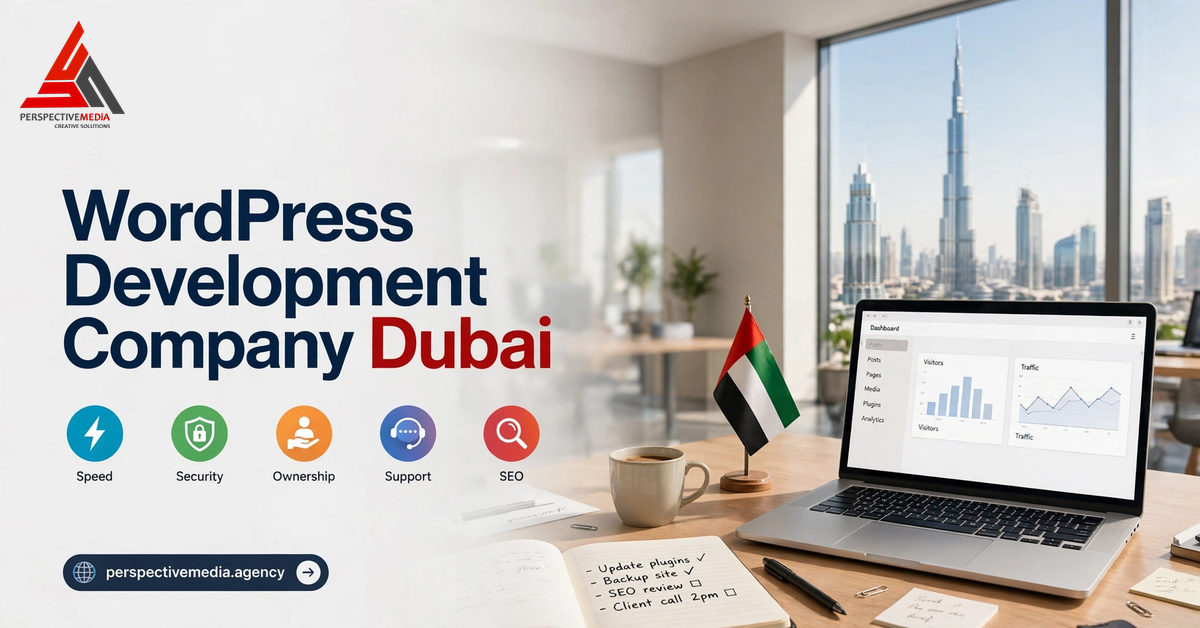
Search for a WordPress development company Dubai has plenty of, and you will find hundreds of near identical promises. Fast delivery. Stunning design. Affordable packages. The problem is that none of that tells you whether the site will still be fast, secure and easy to update two years after launch. That is the part that actually costs money when it goes wrong.
This guide is for business owners and marketing managers who are about to sign a proposal. It explains what a good WordPress build involves, which questions separate a careful team from a theme installer, and what you should own when the project ends. Use it as a checklist before you pay a deposit.
What a WordPress Development Company Dubai Businesses Actually Need
WordPress itself is free. Anyone can install it in a few minutes, pick a theme and call the result a website. So the fair question is what you are paying a company for.
You are paying for judgement. A good team decides what your site needs to say, who it needs to convince, and how each page earns its place. They build a structure your team can edit without calling a developer for every text change. They keep the plugin list short and deliberate. They think about speed, security and search visibility while they build, not as an afterthought once the design is approved.
There is a second job that matters just as much. If you already have a website, it has pages that rank, links pointing at it and enquiries arriving through it. A rebuild that forgets those pages can lose in a week what took years to earn. A careful company maps your old addresses to the new ones before anything goes live.
The third job is leaving you in control. When the project ends, you should own the domain, the hosting account, the WordPress admin login and the code. If any of those sit in the agency’s name, you do not fully own your website, whatever the invoice says.
Start With the Job Your Website Has to Do
Before you compare companies, write down what your site must do. A five page brochure site for a consultancy is a different project from an online store, a booking system or a site with Arabic and English versions. Companies price and staff these projects differently, and the right partner for one is not always right for another.
Be specific. List the pages you need, the actions visitors should take, and the systems the site must connect to. That might be a CRM, a payment gateway, a booking calendar or a WhatsApp enquiry flow. Share examples of sites you like and say what you like about them. A vague brief produces vague quotes, and vague quotes grow during the project.
It also helps to decide how much custom work you really need. A standard theme with light changes suits a simple site and a tight budget. A custom build earns its cost when you need a specific design, custom features, integrations, or a site your team will publish on every week. Our web development service page explains how we scope that choice, and the same logic applies whichever company you hire.
How to Judge a WordPress Development Company Dubai Portfolio
Every company shows its best work. Your job is to look past the screenshots and test what is actually live.
Look at live sites, not screenshots
Ask for links to sites the company built that are still live. Open them on your phone. Time how long the main content takes to appear. Tap the menu, submit a test enquiry if there is a form, and check whether the pages look right on a small screen. A portfolio site that loads slowly or breaks on mobile is telling you something about the build quality behind it.
Google measures this experience directly. Its Core Web Vitals guidance sets clear targets: main content within 2.5 seconds, a response to taps in under 200 milliseconds, and almost no layout movement while the page loads. You do not need to memorise the numbers. You need a developer who builds with them in mind. Our plain English guide to Core Web Vitals shows how to check any site in five minutes, including a portfolio site a company is showing you.
Ask what was custom and what was a theme
There is nothing wrong with a well chosen theme. There is a problem with a company that cannot explain its own builds. Ask which parts were custom coded, which plugins were used and why, and how the site handles updates. Specific answers are a good sign. Vague answers about premium tools usually mean the site is a theme, a pile of plugins and hope.
Also ask who did the work. The person in the sales meeting is rarely the person writing the code. Find out who builds, who manages the project day to day, and what happens if that person leaves. Continuity matters on a site you will run for years.
Speed, Security and the Work After Launch
Launch day is the easy part. The harder part is everything after: a plugin that conflicts with an update, a form that quietly stops sending emails, a security patch that needs applying before attackers find the hole. A good company sells you a plan for those days, not just a launch date.
Security is mostly habits. The WordPress project is blunt about the main one: keep WordPress, plugins and themes up to date, because older versions stop receiving security fixes. The official Hardening WordPress guide covers the basics, from strong passwords and two step authentication to file permissions and backups. The hosting handbook makes the same point from the server side in its security guidance. You do not need to read either document cover to cover. You need a company whose answers match them.
Ask these questions before you sign. Where do backups live, how often do they run, and has anyone tested restoring one? Who applies updates, and how quickly after a security release? Is there a staging copy where changes are tested before they reach the live site? What does the maintenance plan include, and what does it cost after the first year? A company that answers clearly is a company that has done this work before.
Ownership Questions to Settle Before You Sign
Ownership disputes are the most common way a website project turns sour, and they are almost always preventable. Settle these points in writing before work starts.
Your domain should be registered in your company’s name, in an account you control. Your hosting should be your account, with the agency added as a user. You should hold the top level WordPress admin login. Any paid plugins or theme licences should be listed, with who renews them and what happens if the relationship ends. The contract should say you own the content and the finished site, and that you can move it to another provider.
This matters in Dubai for a practical reason. Many businesses here run English sites for the UAE alongside operations in other markets. If you later expand, your website should move with you. Our UAE market page sets out how we structure that kind of multi market work, and our UK market page shows the same ownership principle applied to UK clients. Whichever company you choose, hold them to the same standard.
Red Flags That Should End the Conversation
Some warning signs are reliable enough to act on immediately.
Walk away from a company that will not put the scope in writing. If the proposal does not list pages, features, revisions and timelines, every disagreement later becomes your problem. Walk away from anyone who registers your domain under their name or refuses to hand over admin access. Walk away from quotes that are far below every other quote with no explanation. The missing money comes out somewhere, usually in testing, security or support.
Be careful with guarantees. Nobody can guarantee a number one ranking, a fixed number of leads or a launch date that ignores your own content deadlines. A company that promises outcomes it does not control will struggle to be honest about the outcomes it does control.
Finally, test communication before you commit. Send a short list of questions and see how the answers come back. Clear, specific replies during the sales stage usually continue during the project. Evasive replies rarely improve after the deposit clears.
Frequently Asked Questions
How long does a WordPress website take to build?
A simple business site usually takes a few weeks once content is ready. A larger site with custom features, integrations or an online store takes longer. The honest answer depends on your page count, your content readiness and how many revision rounds you plan. Ask any company to break its timeline into design, build, content loading and testing, so you can see where delays usually happen.
Should I choose a custom theme or a ready made theme?
Choose based on the job. A ready made theme suits a simple site with standard pages and a small budget. A custom build suits businesses that need a distinctive design, specific features, or a site the team will expand often. What matters more than the label is how the site is built underneath: clean structure, few plugins and pages your team can edit easily.
What should a WordPress maintenance plan include?
At minimum: regular backups stored away from the live server, prompt WordPress and plugin updates, security monitoring, and a tested way to restore the site if something breaks. Better plans add uptime checks, small content changes and a monthly report. Ask what is included, what costs extra and how fast the team responds when the site goes down.
Who should own the domain and hosting accounts?
You should. Register the domain in your company’s name and keep hosting in an account you control, with the agency added as a user. Hold the main WordPress admin login yourself. This keeps your options open if you change providers, and it prevents the common dispute where a business cannot move its own website.
How do I check if a portfolio website is actually fast?
Open it on your phone and notice how quickly the main content appears and whether anything jumps around while it loads. Then run the address through a free speed test and check the three Core Web Vitals numbers. A company proud of its builds will be happy for you to test them this way.
Choosing a WordPress development company Dubai businesses can rely on comes down to evidence, ownership and the plan for after launch. Test live sites on your phone. Ask who does the work and what happens when something breaks. Put ownership in writing before you sign. Do those three things and you will avoid most of the expensive mistakes. If you want a second opinion on a proposal you have received, talk to us and we will tell you honestly what we see.