AI chatbots for lead capture are everywhere right now. Every software vendor promises a bot that talks to your visitors, qualifies them, books them in, and never sleeps. Some of that is true. A lot of it is not. The gap between a chatbot that fills your diary and one that drives visitors away is smaller than most vendors admit, and it has very little to do with the technology itself.
This guide separates the two. It covers what lead capture chatbots actually do well, where they fall short, and the five rules that keep one honest. If you run a service business and you are wondering whether a chatbot belongs on your site, start here.
What AI Chatbots for Lead Capture Actually Do
A lead capture chatbot is a conversation on your website, usually in a small window in the corner of the screen. A visitor types a question or taps a button, and the bot responds. The good ones do three jobs.
First, they answer the questions every visitor asks. Opening hours, service areas, prices, how to book. These are the same five or six questions your receptionist answers all day, and a bot can handle them in seconds, at any hour.
Second, they qualify. A bot can ask for a postcode, a service type, or a timeline, then route the visitor to the right outcome. A roofer does not need the same conversation as a dentist, and a bot that asks two or three smart questions can tell them apart before a human ever gets involved.
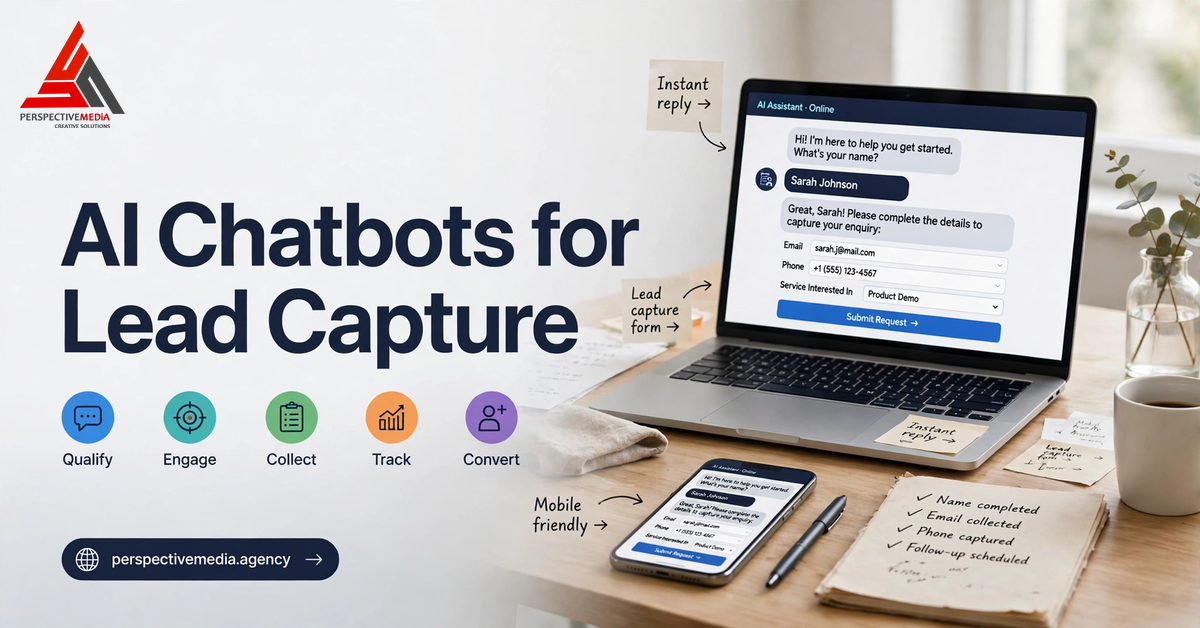
Third, they capture the lead. Name, phone number, email, and a short note about what the visitor needs. Then the details go to your CRM, your inbox, or your booking system. Done well, the visitor feels helped. Done badly, the visitor feels interrogated by a machine that will not let them speak to a person.
Older chatbots followed rigid scripts. If a visitor typed something the script did not expect, the bot broke. Modern AI chatbots understand natural language, so they cope with typos and unusual phrasing. That is a real improvement. It is also where the hype starts, because understanding language is not the same as understanding your business.
Where AI Chatbots for Lead Capture Earn Their Keep
Chatbots are not good at everything. They are very good at a few specific jobs, and those jobs are worth real money to a service business.
After-hours enquiries
Most service businesses lose leads after 6pm. A visitor lands on your site at 9pm, has a question, finds no one to answer it, and leaves. They rarely come back. A chatbot that answers the common questions and takes a booking request overnight turns those lost visits into morning leads. This is the single strongest case for a chatbot. Your website works around the clock, and your chatbot should too.
Qualifying before the call
Not every enquiry deserves a phone call. A chatbot that asks for the service needed, the location, and the urgency can sort genuine buyers from tyre kickers before your team spends a minute on the phone. The result is fewer wasted calls and better conversations with the people who do call. Our guide to choosing an AI automation agency in the UK covers how this kind of qualification fits into a wider automation setup. The principle is the same: let the machine do the sorting, let humans do the selling.
Booking straight into the calendar
The best chatbots do not just collect a name and promise a callback. They check your live availability and book the visitor in on the spot. That removes the gap between interest and commitment, and the gap is where most leads die. A visitor who books a slot is far more likely to show up than one who filled in a form and is waiting for a call back. If your chatbot cannot see your calendar, it is a form with extra steps.
Where the Hype Falls Apart
Most chatbot demos look impressive because they are scripted. Real visitors are not. Here is where the promises usually break.
The bot invents answers. AI chatbots sometimes answer with confidence when they do not know the answer. They quote prices you do not charge and promise services you do not offer. One wrong answer can cost you a customer and a review. If your bot is not grounded in your real business information, with clear limits on what it may say, it is a liability dressed up as innovation.
The bot traps visitors. Some bots refuse to hand over to a human. They loop through the same three questions, ignore “speak to a person”, and turn a warm visitor into an angry one. Every chatbot needs a visible escape route to a human, on every screen, at every step.
The bot collects junk leads. A chatbot that asks for an email before it has earned any trust will collect fake addresses and dead numbers. Lead capture works when the visitor sees value first. Answer the question, then ask for details. Bots that demand contact details in the first message are optimised for the vendor’s demo metrics, not for your business.
Nobody maintains it. A chatbot is not a fit-and-forget tool. Prices change, services change, offers expire. A bot running on last year’s information will confidently mislead your visitors all year. Someone on your team needs to own the bot, review its conversations weekly, and fix what it gets wrong. That is a real ongoing cost, and vendors rarely mention it.
The wider AI agents conversation has the same pattern. Our earlier post on the AI agent race made the same point: the tools are genuinely powerful, and the marketing around them is genuinely overblown. Judge the tool on your own numbers, not on the vendor’s demo.
AI Chatbots for Lead Capture: 5 Rules That Keep Them Honest
If you decide to add a chatbot, these five rules will keep it useful instead of annoying.
1. Start with one job, not ten. Pick the single most valuable job for your business: after-hours booking, for example, or qualifying quote requests. Build the bot around that one job and get it right. Bots that try to do everything end up doing nothing well.
2. Ground every answer in your real information. Feed the bot your actual services, prices, areas, and policies. Set clear boundaries on what it may and may not say. Test it with awkward questions before it goes live, and keep testing it after. A bot that says “I don’t know, let me get someone” is far better than a bot that guesses.
3. Put a human one tap away. Every chatbot screen should offer a clear path to a person: a phone number, a callback request, or a live chat handover. Most visitors will never use it. The ones who do are usually your best leads, and they should never have to fight for it.
4. Ask for details after you have helped, not before. Answer the visitor’s question first. Then ask for a name and number so you can follow up. Visitors give real details when they have already received value. They give fake ones when they feel cornered.
5. Review the conversations every week. Read what visitors actually asked and how the bot answered. You will find gaps in the first week, and you will keep finding them. Treat the review as a standing task, not a launch activity. The businesses that get value from chatbots are the ones that keep tuning them.
How to Choose a Chatbot Platform
When you compare platforms, ignore the feature lists. They all look the same. Ask four questions instead. Does it connect to your calendar and your CRM, or does it just send emails? A bot that cannot book or update your records creates manual work instead of removing it. Can you control what it says? Look for tools that let you set approved answers and review conversations. Does it hand over to a human cleanly? Test this yourself. If it takes more than one tap, your visitors will give up. What happens when it gets something wrong? Good platforms make mistakes easy to see and fix. Bad ones bury them.
The statistics vendors quote are worth reading with a sceptical eye. Drift’s collection of chatbot statistics and Salesforce’s roundup of chatbot statistics both show that customers are increasingly comfortable talking to bots, and that response speed matters more than most businesses think. Read them as evidence that visitors will use a good bot, not as proof that any bot will do.
Before you sign anything, work out what one extra booked job a week is worth to you, then compare it with the monthly cost of the bot, including the time someone spends reviewing its conversations. A chatbot should fit into your AI automation services plan as one piece among several, not as a replacement for all of them.
Frequently Asked Questions
Do AI chatbots for lead capture actually convert visitors?
Yes, when they are built around a real job like after-hours booking or qualification. The bots that convert answer a question first and ask for details second. Bots that demand contact details up front, or trap visitors in loops, usually convert worse than a simple contact form.
Will a chatbot replace my receptionist?
No. A chatbot handles the repetitive questions and the out-of-hours traffic, so your team spends its time on the conversations that need a person. Complex enquiries, complaints, and high-value sales still need a human.
How long does it take to set up a lead capture chatbot?
A simple FAQ and booking bot can be live in a week. A custom build connected to your CRM and calendar takes longer, usually a few weeks including testing. The testing matters more than the build, so budget time to try the bot with real questions before your visitors meet it.
What should my chatbot never do?
It should never invent prices, services, or availability. It should never hide the path to a human. And it should never collect personal details it does not need. If your bot needs a rule for an edge case, write the rule. Do not let the bot improvise an answer your business cannot stand behind.
How do I know if my chatbot is working?
Track three numbers: how many conversations start, how many end in a booked appointment or a qualified lead, and how many visitors ask for a human. If conversations start but few convert, the bot is probably asking for details too early or answering badly. Review the transcripts weekly and fix the top failure first.
AI chatbots for lead capture work when they are treated as part of your customer service, not as a gimmick on your homepage. Start with one job, ground the bot in your real information, keep a human one tap away, and review the conversations every week. Do that, and the bot will quietly add leads while you sleep. If you want help deciding whether a chatbot fits your business, our AI automation services page is a good place to start, and a short conversation will tell you more than any demo.